Milton's landscape splits into two distinct geotechnical zones. South of Derry Road, the glacial till and shale bedrock of the Niagara Escarpment influence shallow foundations, while the newer developments north toward Highway 401 sit on deeper lacustrine clay plains where the plastic limit can shift dramatically with moisture content. A contractor working the Boyne subdivision will face completely different Atterberg limits than one near the escarpment brow. The liquid limit and plasticity index define how these soils behave under load, and without that data, earthwork specifications become guesswork. Our lab runs Atterberg limits on every cohesive sample from Milton projects because the town's rapid expansion into formerly agricultural land keeps uncovering variable clay deposits that standard borehole logs alone cannot classify. We also pair this with grain size analysis when the fines content needs precise quantification for frost heave susceptibility, and Proctor compaction testing to tie the plastic behavior directly to field density targets.
Atterberg limits are not just classification numbers. In Milton's clay plains, a 5% change in moisture content near the plastic limit can mean the difference between stable cut slopes and weeks of rework.
Service characteristics in Milton Ontario
Local geotechnical conditions in Milton Ontario
A 6-storey mixed-use building on Ontario Street South ran into trouble during the wet spring of 2023. The excavation exposed a silty clay layer that the preliminary borehole log had classified as low-plasticity based on visual inspection alone. After the first heavy rain, the cut slope began to ravel and the contractor lost three days stabilizing the face. Lab testing on the material showed a liquid limit of 52% and a plasticity index of 28% — a high-plasticity clay that had been misidentified in the field. Atterberg limits caught the discrepancy because the plastic limit thread-rolling test revealed the soil's true cohesive behavior. When a soil plots above the A-line on the Casagrande plasticity chart, it demands different slope protection and drainage measures. In Milton, where spring groundwater levels rise fast in the fractured shale transition zone, skipping the plasticity index on a single sample can cascade into a safety issue on site. The Ontario Building Code references ASTM D4318 indirectly through its reliance on USCS classification for foundation design parameters.
Our services
Atterberg limits are rarely ordered in isolation. Most Milton projects combine them with one or more of the following services to build a complete geotechnical profile.
Full Atterberg Suite
Liquid limit by multipoint Casagrande method, plastic limit by hand rolling, and calculated plasticity index. Delivered with a USCS classification per ASTM D2487 and a short interpretive note on the soil's expected behavior during excavation and compaction.
Combined Classification Package
Atterberg limits plus sieve and hydrometer analysis for a complete grain size distribution curve. Useful when the fines fraction is high and the engineer needs both the plasticity and the full particle size breakdown for drainage or frost heave assessments.
Moisture Conditioning Guidance
We run the plastic limit alongside a Proctor curve to define the acceptable moisture range for compaction. This keeps the contractor within specification and avoids the rework that comes from placing material wet of optimum in Milton's silty clay deposits.
Frequently asked questions
What do Atterberg limits actually measure?
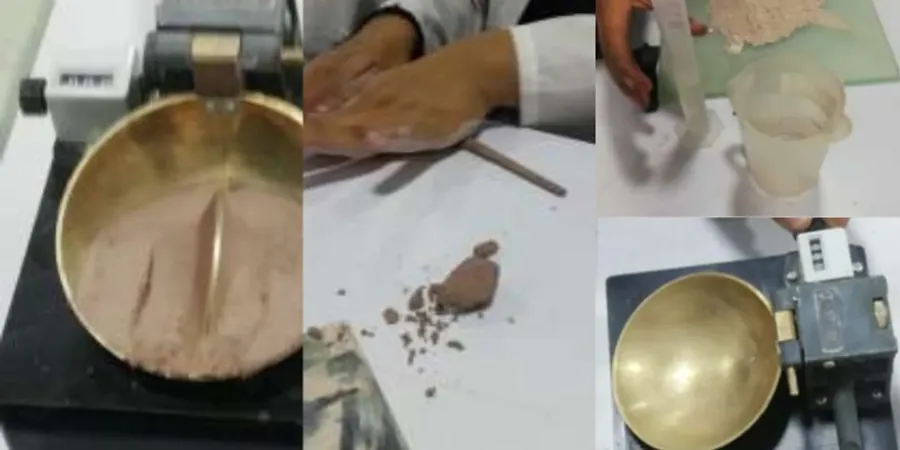
Atterberg limits define the moisture contents at which a fine-grained soil transitions between solid, plastic, and liquid states. The liquid limit (LL) is the water content where the soil begins to flow under 25 blows in a Casagrande cup. The plastic limit (PL) is the water content where the soil crumbles when rolled into a 3 mm thread. The plasticity index (PI = LL - PL) indicates the range of moisture over which the soil remains plastic. These numbers feed directly into USCS classification, foundation bearing capacity estimates, and compaction specifications.
How much does Atterberg limits testing cost in Milton?
For a standard set of Atterberg limits on one sample, our lab charges between CA$90 and CA$140 depending on whether it is a standalone test or part of a larger testing package. Rush turnaround adds a small surcharge. Combined classification packages that include Atterberg limits, sieve analysis, and hydrometer are priced based on the full scope.
Which ASTM standard applies to Atterberg limits?
ASTM D4318-17e1 is the current standard for liquid limit, plastic limit, and plasticity index of soils. We follow Method A (multipoint liquid limit) and the hand-rolling method for plastic limit. Sample preparation is per ASTM D421 dry method, and classification uses ASTM D2487.
How long does the test take from sample drop-off to report?
Standard turnaround is three working days from the time we receive the sample. We offer a 24-hour rush option when the contractor is waiting on results to adjust moisture conditioning on an active site in Milton. Larger batches of 10 or more samples may require an extra day.
Can Atterberg limits be run on sandy soils?
Atterberg limits apply only to the fine fraction of a soil, specifically the material passing the No. 40 sieve. If the sample is predominantly sand with very little silt or clay, the test is not meaningful. In those cases we recommend a particle size analysis instead. For silty sands where plasticity is borderline, we run the test on the minus-40 fraction and note the overall sample composition in the report.