The Niagara Escarpment doesn't just give Milton its distinctive skyline—it shapes every road base installed across the 401 corridor. Winter temperatures here routinely drop below minus 15 degrees Celsius, and the spring melt saturates the silty clay till that blankets most of the Boyne and Campbellville areas. A pavement structure that works fine in Mississauga often fails prematurely in Milton because the underlying Halton Till holds moisture differently, expanding and contracting through more than 50 freeze-thaw cycles each winter. Our lab on the west side of the GTA sees the same pattern year after year: subgrade resilient modulus values that drop off sharply between November and April. For any flexible pavement design north of Britannia Road, we start by correlating the CBR field data with laboratory soaked specimens—because the design CBR you measure in August tells you almost nothing about what happens in February.
A Milton subgrade that tests at 6 percent CBR in summer can drop below 3 percent after a single freeze-thaw cycle if drainage isn't addressed during design.
Service characteristics in Milton Ontario
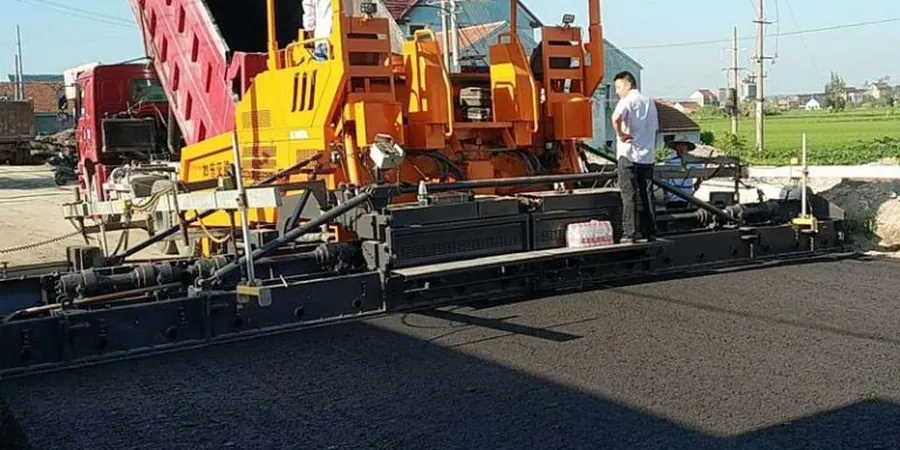
Local geotechnical conditions in Milton Ontario
What we notice repeatedly on Milton projects is that the biggest risk isn't the design number itself—it's the assumption that the subgrade will stay consistent across 300 metres of roadway. A site near the quarry off Highway 25 can transition from well-drained granular fill to saturated silty clay in less than 100 metres, and if the pavement cross-section doesn't adjust accordingly, you'll see alligator cracking within two years. Drainage is the other variable that keeps project managers up at night: Milton's gently rolling topography means water collects in subtle swales that barely register on a topographic survey but create perched water tables that soften the subgrade right under the wheel path. We've learned to insist on subsurface drainage investigation even for smaller commercial parking lots. The cost of a perforated subdrain installed during construction is trivial compared to the cost of milling and replacing a failed asphalt layer after the first winter.
Our services
Our Milton flexible pavement group covers the full design cycle, from subgrade investigation through to construction QA/QC. Every project runs through the same accredited lab that handles MTO acceptance testing, so the numbers in the design report match the numbers the contractor sees on the compaction ticket.
Subgrade Characterization & CBR Testing
Field and laboratory CBR programs per ASTM D1883, including soaked specimens that simulate Milton's spring-thaw conditions. We correlate in-situ density using nuclear gauge readings with lab compaction curves.
Pavement Structural Design
Layer thickness design using AASHTO 93 and MTO mechanistic methods. We calculate structural number (SN) requirements based on 20-year ESAL projections and provide OPSS-compliant cross-section drawings.
Granular Base & Asphalt QA/QC
Full quality assurance during construction: Proctor density control on granular layers, Marshall or Superpave acceptance on asphalt, and nuclear gauge compaction verification at each lift.
Forensic Pavement Evaluation
For existing pavements showing distress, we perform core sampling, deflection testing, and subgrade re-evaluation to identify failure mechanisms and recommend rehabilitation strategies.
Frequently asked questions
What's the typical cost for a flexible pavement design in Milton?
For a standard commercial or collector-road pavement design in Milton, including subgrade investigation, CBR testing, and the structural cross-section report, fees generally range from CA$2,010 to CA$7,010 depending on the number of test locations and whether traffic projections need to be developed from scratch.
How does the Niagara Escarpment geology affect pavement performance here?
The escarpment's glacial history deposited Halton Till across most of Milton—a mix of silty clay with occasional sand lenses and shale fragments. This till is highly moisture-sensitive, so its support capacity swings dramatically between dry summer conditions and saturated spring conditions, making soaked CBR values essential for design.
Do you follow MTO or municipal standards for Milton projects?
We follow the Ontario Provincial Standard Specifications (OPSS) and the AASHTO 1993 design guide as our primary references. For municipal roads within Milton, we also incorporate any additional requirements from the Town's engineering standards, particularly around minimum granular thicknesses and asphalt binder grades.
What's the minimum asphalt thickness for a parking lot in this climate?
For a commercial parking lot in Milton with passenger vehicle traffic only, we typically specify no less than 75 millimetres of asphalt in two lifts (40 mm HL3 surface over 35 mm HL8 base), but the exact thickness depends entirely on the subgrade CBR. Softer subgrades on the east side of town often require an additional 20 to 30 millimetres.
How long does the design process take from investigation to final report?
A typical pavement design for a Milton site takes about three to four weeks from the field investigation to the final stamped report. The laboratory CBR testing requires a four-day soak period per ASTM D1883, which drives the timeline, and we schedule the report drafting to overlap with the lab work so the client isn't waiting unnecessarily.